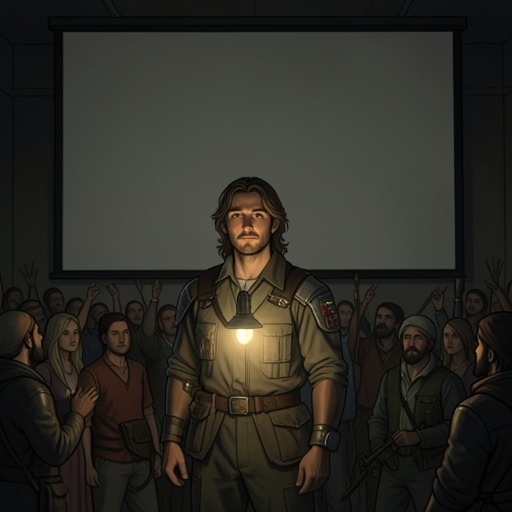
The Hub’s biometric access controls
Made for LoveThe Hub’s biometric access controls are the layered security system governing entry to Byron’s domestic compound. Voice and retinal detection regulate access to the compound, while certain rooms require both a fingerprint and a keypad code; even the cars are controlled remotely. The system makes the home a place where movement depends on technological authentication rather than ordinary keys.
Design and Reach
The access protocol combines several forms of identification rather than relying on a single threshold. Voice and retinal checks control entry to The Hub, and the stricter requirements for certain rooms add fingerprint recognition and a keypad code. Remote control extends the same technological logic to the household’s cars, placing both domestic access and transport within a managed system.
Contrast with the Physical Key
When Hazel leaves, she takes her father’s house key from a wooden dachshund key holder by the front door. Its teeth press into her palm when she grips it tightly, making the key’s material presence the opposite of The Hub’s layered, largely invisible authentication. Hazel recognizes that the small object’s appeal lies partly in what it represents: a return to a more manual life, away from the technological present she shared with Byron.
Significance
For Hazel, the access system is part of a future-oriented domestic world from which she wants to separate herself. She rejects not only Byron’s personal sphere but the technological culture associated with it, including the Bionic Revolution, a name that sometimes slips into the punning form Byronic. Against that world, the key offers a modest, tangible means of imagining self-reclamation. The contrast makes access more than a security procedure: it marks the distance Hazel hopes to place between her own life and Byron’s technological order.